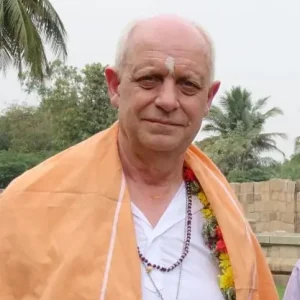
The recent headline-grabbing claim that a so-called “New Nostradamus” has predicted dramatic developments involving Donald Trump has generated a mix of fascination and skepticism online. The figure behind the prediction is Craig Hamilton-Parker, a British psychic who has gained attention for making forecasts about major global events. While some of his followers argue that his track record of prior predictions lends weight to his latest warning, others dismiss it as implausible. Hamilton-Parker’s newest claim centers on the idea that global instability—potentially triggered by conflict in regions like Iran or other international flashpoints—could create extraordinary circumstances, making traditional political norms temporarily irrelevant and potentially allowing Trump to assume power under unprecedented conditions. The announcement has reignited debates about the role of prophecy, media sensationalism, and public fascination with political speculation.
Hamilton-Parker, sometimes referred to as the “Prophet of Doom,” has cultivated a following through online platforms, where he shares his visions and spiritual interpretations. He draws on practices such as Nadi astrology, which he claims provide insight into future events. Over time, he has asserted that he predicted occurrences like Brexit, the Covid-19 pandemic, and various political outcomes involving Trump. While these claims are difficult to verify objectively, they have bolstered his reputation among supporters, who argue that his foresight merits consideration. Critics, on the other hand, highlight the vagueness of many of his predictions and suggest that apparent successes are often the result of broad interpretation after events occur. Nevertheless, Hamilton-Parker’s influence has grown, fueled in part by a media environment eager for sensational narratives and a public eager for guidance amid uncertainty.
At the heart of Hamilton-Parker’s latest prediction is the controversial idea that Trump could serve a third term as president of the United States. According to the psychic, such an outcome would not emerge through ordinary democratic processes but rather through extraordinary global crises. He envisions scenarios in which a major conflict—possibly involving Iran, Taiwan, or other geopolitical flashpoints—could disrupt elections, prompting emergency measures that temporarily override established constitutional norms. Hamilton-Parker has described this as “something will occur that overturns the existing rules,” suggesting that periods of intense global upheaval could produce conditions that allow for unprecedented political developments. The idea has captivated segments of the public while drawing significant criticism from legal experts and political analysts.
This prediction directly conflicts with the 22nd Amendment to the United States Constitution, which prohibits any individual from being elected president more than twice. The amendment, ratified in 1951, forms a cornerstone of American democratic governance and has been consistently enforced in every presidential election since its adoption. While Hamilton-Parker speculates that extreme circumstances could challenge or temporarily bypass such rules, there is no recognized legal or political mechanism that would permit a third term under normal conditions. This legal barrier is one of the primary reasons why experts view his prediction with skepticism. Analysts emphasize that constitutional safeguards are deeply embedded, and any suggestion that they could be suspended in response to crises is largely speculative and legally unsubstantiated.
The timing of Hamilton-Parker’s prediction has contributed to its visibility, coinciding with heightened global tensions. Conflicts and uncertainties involving regions like the Middle East, particularly Iran, as well as ongoing concerns about China and Taiwan, have heightened public anxiety about international stability. The psychic has linked these developments to a broader pattern of disruption, warning that multiple crises could intersect in ways that reshape global relations and domestic political landscapes. Beyond politics, he has also issued warnings about environmental disasters and shifts in global alliances, painting a picture of a world entering a period of profound upheaval. This combination of geopolitical and environmental anxieties has helped fuel the discussion around his claims, even among those who remain doubtful of their plausibility.
Despite the dramatic nature of these assertions, it is essential to differentiate between verified information and speculative prediction. Hamilton-Parker’s statements are rooted in spiritual interpretation and personal belief rather than scientific evidence, formal intelligence, or verifiable data. While such predictions can capture public imagination—especially during periods of uncertainty—they should not be treated as factual forecasts. Media coverage amplifies the story, highlighting its sensational aspects, but the claims themselves remain unproven. They reflect not only the enduring public fascination with prophecy but also the human desire to find patterns and meaning in a chaotic and unpredictable world.
Ultimately, the conversation surrounding Hamilton-Parker’s latest prediction illustrates a broader cultural phenomenon: the intersection of politics, media, and speculation during times of uncertainty. While some members of the public view his warnings as prescient, others treat them as entertainment or cautionary tales about credulity. The focus on extraordinary possibilities, such as a third presidential term for Trump, underscores how sensational predictions can capture attention even when they conflict with established legal and institutional realities. In the end, the story serves as a reminder of the complex ways in which hope, fear, and curiosity influence public perception, particularly when uncertainty about the future is high and authoritative guidance feels limited.