The case centers on an exceptionally rare and devastating workplace injury involving an eighteen-year-old laborer in India, whose life ended abruptly after a heavy metal object struck the front of his head. The impact was far more than a surface injury; it produced a catastrophic cervical spine trauma that stunned the medical team who later analyzed it. What made the event particularly notable was not only the worker’s age and the brutal nature of the blow, but the fact that the pattern of his spinal damage defied established injury classifications commonly used in trauma medicine. Published in the Journal of Orthopaedic Case Reports in September 2022, the incident was described by the reporting physicians as the first documented example of its kind. Their report placed the tragedy within a broader discussion of occupational hazards and the urgent need for better safety measures for workers who operate near heavy equipment, suspended loads, or unstable structures.
Details of the incident reveal the immediate and overwhelming force of the impact. When the heavy metal object struck the young worker, he lost consciousness almost instantly and went into shock, indicating the severity of the underlying trauma. Bystanders or coworkers appear to have alerted emergency responders quickly, as he was intubated soon after to protect his airway and ensure adequate ventilation. A rigid cervical collar was applied to attempt stabilization of the neck, a standard but essential step when spinal injury is suspected, especially in cases where the mechanism of injury involves blunt force to the head or upper spine. He was then urgently transported to a hospital equipped to handle major trauma. These initial emergency actions, while medically appropriate, could not reverse the profound structural disruption that had already occurred within his cervical spine.
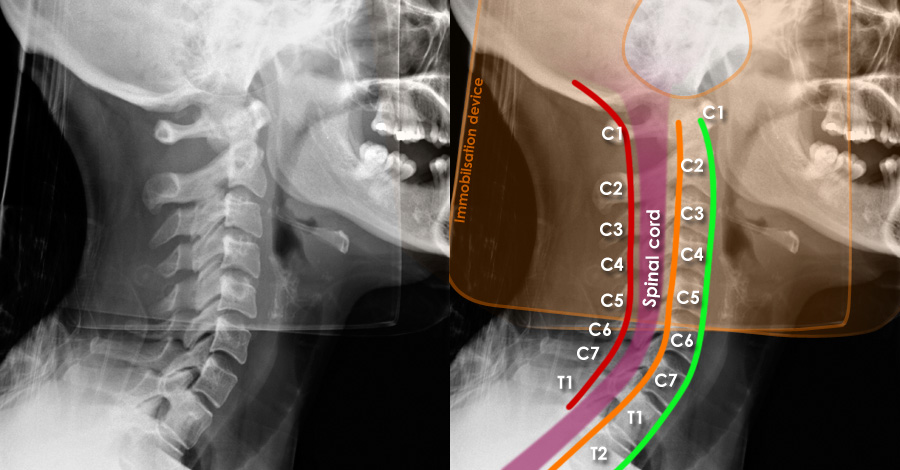
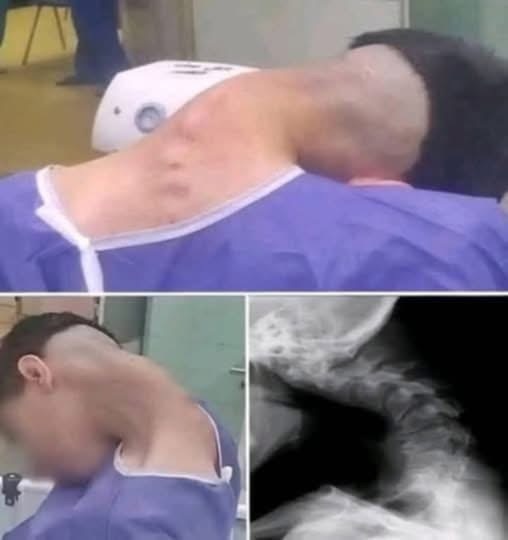
When doctors performed imaging studies to determine the full extent of the injury, the results were alarming. A CT scan revealed what they called “an isolated retropulsion of the C5 vertebral body into the spinal canal,” meaning that the fifth cervical vertebra had been forced backward into the space occupied by the spinal cord. Compounding this, the patient also had a secondary fracture at the C6 vertebra. Retropulsion of a vertebral body is already a serious finding, but in this case the pattern was described as “nutcracker-like,” suggesting a crushing force applied in a highly unusual direction. What stunned the medical team further was the absence of other injuries that would typically accompany such displacement—no facet joint dislocation, no pedicle fracture, none of the standard indicators that help trauma specialists categorize cervical injuries and predict outcomes. This absence of expected structural damage made the case an anomaly that challenged existing medical frameworks.
The rarity of this injury pattern meant that clinicians could not rely on established classification systems to guide treatment decisions. Cervical spine injuries are generally interpreted using standardized models that help physicians determine stability, expected complications, and the most effective interventions. But this case fell outside those boundaries, leaving the team to apply urgent, fundamental principles of care without the benefit of a clear diagnostic category. They attempted cervical traction, a procedure aimed at realigning vertebral structures and alleviating compression on the spinal cord. They also provided ventilatory support, a common requirement when spinal cord trauma interferes with respiratory function. Despite these efforts, the severity of the spinal canal compromise—combined with the initial brain impact and shock—left little chance for survival. The patient succumbed to his injuries within forty-eight hours, underscoring the brutality of the trauma and the limits of medical intervention once the spinal cord and cervical vertebrae sustain this level of damage.
The outcome of the case prompted the authors to reflect not only on the medical uniqueness of the injury but also on broader issues of occupational safety and the responsibilities of workplaces to protect their workers. The death of an eighteen-year-old—someone at the very beginning of his working life—makes the tragedy especially stark. The authors emphasized that such incidents serve as painful reminders of the dangers faced by individuals in industrial, mechanical, and construction environments where heavy objects are lifted, suspended, or handled. They pointed out that basic safety equipment, such as protective helmets, may offer limited protection against extreme impacts but still represent essential safeguards that should be universally enforced. Additionally, safer protocols governing how overhead loads are secured, moved, or stored can significantly reduce the likelihood of similar fatal accidents. This case, though medically rare, is emblematic of preventable hazards that persist in workplaces lacking sufficient oversight or protective standards.
Beyond safety concerns, the medical discussion called for improvements in how spinal trauma is classified, studied, and understood. Because this injury did not fit into the established models, it highlighted the need for evolving classification systems capable of capturing atypical patterns of vertebral displacement and spinal canal compromise. More comprehensive frameworks could help clinicians identify rare variations, improve diagnostic accuracy, and develop treatment strategies that account for outlier cases. Such refinements could also enhance the body of medical literature, enabling future physicians to respond more effectively when confronted with unfamiliar injury patterns. Ultimately, the case stands as a sobering reminder of how unpredictable real-world trauma can be—and how both workplace safety reforms and advances in medical knowledge are necessary to prevent similar tragedies or better manage them when they occur.