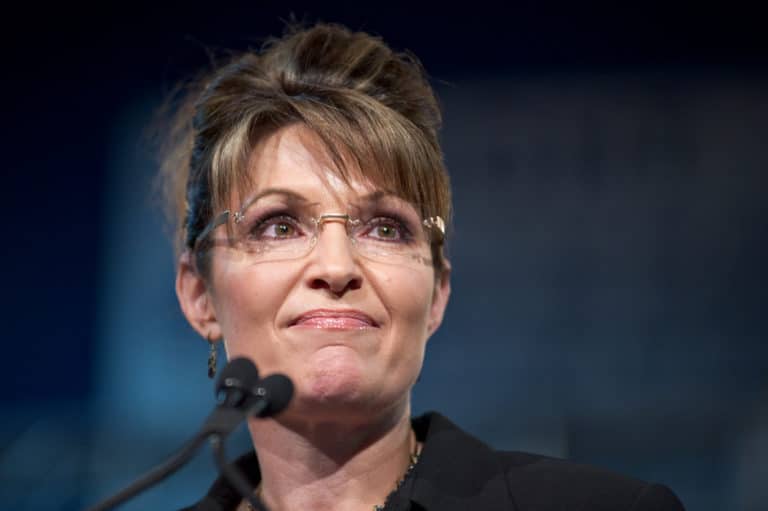
Sarah Palin was impossible to miss in 2008, when John McCain, the Republican presidential nominee, plucked the relatively little-known Alaska governor onto the national stage. She arrived with an aura that was both unmistakably folksy and undeniably combative, a mix of charm and fire that set her apart from conventional political figures. Described by supporters and critics alike as a “force of nature,” Palin had a rare ability to make viewers feel as though she were speaking directly to them, in their living rooms, about their concerns, their values, and their frustrations with Washington. She combined a homespun confidence with a scrappy underdog appeal, projecting both relatability and ambition. It was a combination that electrified some voters and unnerved many others. Palin’s presence on the ticket transformed what might have been a conventional vice-presidential pick into a national phenomenon. She became a constant subject of media coverage, a lightning rod for criticism, and a symbol for a conservative populist movement that was just beginning to find its voice. Yet beyond the headlines and the caricatures, there was a woman whose life had always been deeply intertwined with the rugged realities of Alaska, a place where resilience and independence are not just admired but necessary. Her story was compelling not merely because of her politics, but because of the contradictions and complexities of her journey, a journey that would continue to unfold in the years after 2008, when she stepped back from the national stage and faced challenges that were intensely personal and profoundly public.
Born in Sandpoint, Idaho, and raised in the small Alaskan town of Wasilla, Sarah Palin’s early years were marked by the type of experiences that shape both character and ambition. At Wasilla High School, she was not only academically competent but also athletically gifted, particularly on the basketball court. She later called her high school basketball years “life-changing,” acknowledging how sports taught her discipline, leadership, and resilience. It was on that court that she met her future husband, Todd Palin, a fellow student and athlete whose quiet determination matched her energy. Their courtship was emblematic of their shared Alaskan sensibilities: practical, straightforward, and imbued with a certain rugged romanticism. In 1988, the couple eloped at a small courthouse, recruiting two witnesses from the retirement home across the street because a formal wedding was beyond their means. They would go on to build a large, close-knit family—children Track, Bristol, Willow, Piper, and Trig—and a life deeply rooted in Alaska’s demanding environment. Before entering politics, Palin worked as a local news reporter and helped manage the family’s commercial fishing business, absorbing lessons in communication, hard work, and community engagement. Her rise into politics, culminating in her election as Alaska’s youngest and first female governor in 2006, reflected not only ambition but also a life-long familiarity with the state’s unique challenges and the ability to navigate them with determination and pragmatism. Her story was one of relentless upward mobility, but it was also inseparable from the broader narrative of Alaska itself, a place where self-reliance and grit are daily necessities.
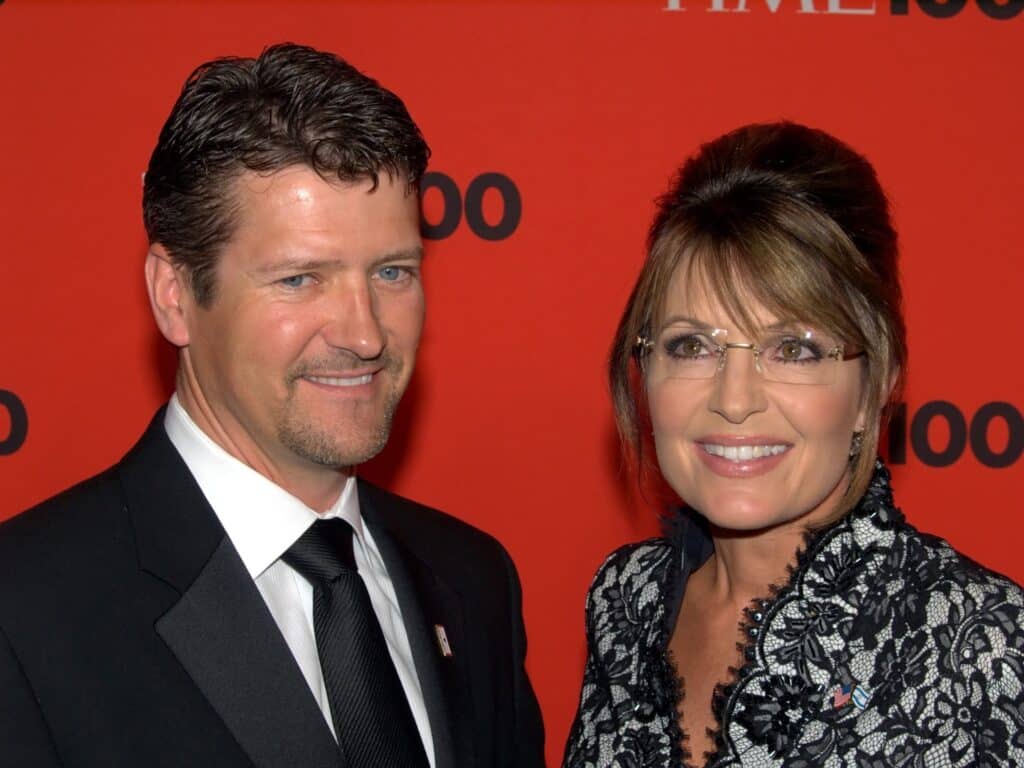
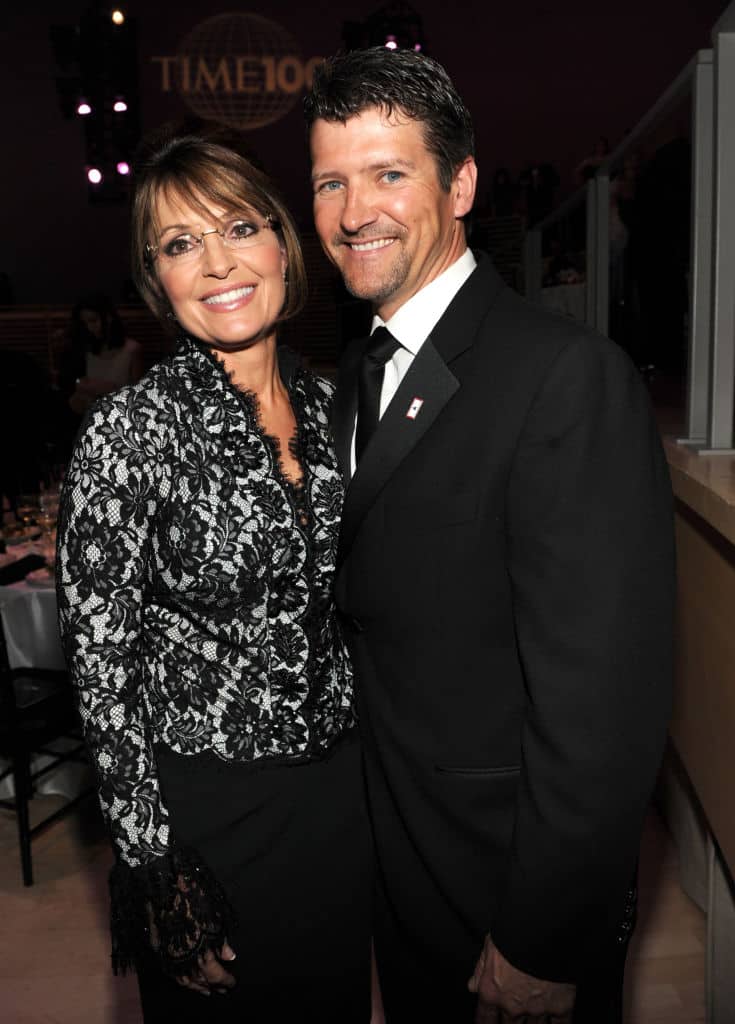
Todd Palin, meanwhile, emerged as an essential yet understated figure in the public narrative. Known as the self-styled “First Dude” during Sarah’s gubernatorial tenure, Todd cultivated an image of quiet strength and groundedness that complemented his wife’s high-profile visibility. A champion of the grueling Iron Dog snowmobile race, Todd balanced demanding work in Alaska’s oil fields with the equally demanding responsibilities of parenting, demonstrating a resilience that mirrored the environment in which they lived. When John McCain tapped Sarah Palin for the 2008 vice-presidential ticket, Todd’s role became even more critical at home. The family suddenly found themselves under the unforgiving glare of national scrutiny, and the couple’s private life—Bristol’s teenage pregnancy, family dynamics, and the constant media spotlight—became fodder for public commentary. Todd’s steadiness provided a counterbalance to the storm swirling around Sarah, allowing her to focus on the political stage while the family maintained a semblance of normalcy amid extraordinary pressures. Their partnership seemed to outsiders a model of complementary strengths: Sarah as the fiery public figure, Todd as the steady anchor, each fulfilling roles that reinforced the other’s capacity to manage personal and professional demands in tandem. The dynamic also highlighted how family support often plays an unacknowledged role in political careers, particularly when every decision and misstep is magnified by media attention.
Despite appearances, the Palins’ marriage was far from immune to the strains of public life. From the outside, their three-decade marriage looked unshakeable, a partnership forged through shared experiences and enduring mutual loyalty. However, the pressures inherent in public exposure, combined with personal differences and changing life circumstances, eventually took a toll. In 2019, shortly after their 31st wedding anniversary, Sarah Palin learned via an attorney’s email that Todd was filing for divorce—a revelation she described as feeling like being “shot.” The reasons cited were incompatibility, yet for Sarah, the news represented more than just the end of a marriage; it challenged a lifelong belief in the sanctity of the marital covenant. She initially sought counseling, hoping to salvage the relationship and preserve the family unit, demonstrating her enduring commitment to both her spouse and their shared history. Ultimately, the divorce was finalized on March 23, 2020, marking the end of an era for a couple whose lives had been so public that every private struggle risked becoming a spectacle. The split left emotional scars that lingered, affecting not only Sarah and Todd individually but also their children, who had grown up navigating both ordinary family life and extraordinary public attention. The dissolution of the marriage was a reminder that even those who appear to have it all—the public success, the family, the fame—face vulnerabilities and heartbreak that no amount of external support or political acumen can entirely shield them from.
Life after divorce, particularly under the scrutiny of public eyes, can be a delicate and painful process, but Sarah Palin has demonstrated a remarkable capacity to navigate this transition with resilience. She has openly acknowledged the lingering sting of the divorce while emphasizing the necessity of maintaining a cooperative relationship with Todd, primarily for the sake of their youngest child, Trig. Todd has moved on, establishing a relationship with a partner in the Lower 48, while Sarah herself found unexpected solace in a renewed friendship with former New York Rangers star Ron Duguay. Initially a favor—guiding her through New York City—the friendship evolved into a relationship Sarah describes as “safe and comfortable,” a marked contrast to the turbulence of her past marriage. Duguay’s support has extended into her political life as well, providing both emotional encouragement and public endorsement as she re-entered the political arena, running for Alaska’s at-large congressional seat. This phase of her life underscores the interplay of personal healing and public ambition, illustrating that resilience is often nurtured not in isolation but through meaningful human connection. It also highlights Sarah’s enduring capacity to blend private renewal with professional re-engagement, a duality she has managed with characteristic pragmatism and determination.
Rebuilding a life after a marriage ends is never easy, especially when it is done in the public eye and with a large family involved. Sarah Palin’s experience exemplifies both the challenges and the rewards of forging a new path amid scrutiny and expectation. With five children and seven grandchildren observing and participating in her life, her choices carry weight beyond herself, shaping family dynamics and modeling resilience for the next generation. Yet Palin continues to shoulder forward, applying the same persistence, tenacity, and adaptability that defined her early years in Alaska. From a courthouse elopement attended by two borrowed witnesses to the glare of the national ticket and back to the long, familiar winters of Wasilla, her life has been marked by dramatic highs and public lows. She has lived loudly, stumbled openly, and persevered relentlessly, showing an ability to transform personal challenges into lessons in endurance and reinvention. Her story reflects a broader narrative about the interplay of public life, personal hardship, and the pursuit of fulfillment, revealing that even those who achieve fame are, at heart, navigating the same fundamental human struggles as everyone else. With a new partner by her side and a familiar fire in her voice, Sarah Palin’s journey continues to demonstrate that life—like the Alaskan wilderness she has always called home—is unpredictable, demanding, and, ultimately, a test of endurance, courage, and reinvention.
Sarah Palin’s story, viewed across decades, offers a portrait of a woman who has consistently embraced risk, challenge, and visibility, both in the public sphere and in her private life. Her trajectory—from a small-town Alaskan girl to a national political figure and public personality, to a woman grappling with the end of a long marriage and the search for personal happiness—speaks to resilience in its many forms. She has faced scrutiny, judgment, and misrepresentation, yet continues to assert agency over her choices and her narrative. The evolution of her personal relationships, the endurance of her political ambitions, and her capacity to find renewed love and purpose highlight the complex interplay between personal vulnerability and public strength. In all of this, Palin’s life exemplifies how identity, family, and ambition intersect in ways that are often messy, unpredictable, and deeply human. She remains a figure who captivates attention not simply because of politics or celebrity but because of the raw and relatable humanity she embodies—a person confronting the profound challenges of life, love, and legacy with the same fortitude that once propelled her from Wasilla High School basketball courts to the nation’s stage. Her story is far from over, and its continued unfolding promises further insights into resilience, reinvention, and the enduring pursuit of personal and political fulfillment.