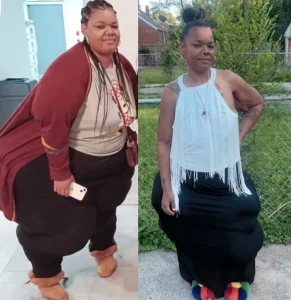
For years, Jameka Mauldin felt trapped inside her own body. Her weight had climbed to 51 stone, and she often struggled with the simplest of daily tasks, from getting out of bed to walking across a room. The 35-year-old single mother described life as a constant battle against her own legs, which had grown disproportionately large and heavy over time. Doctors, friends, and even strangers frequently offered the same advice: “Eat less and move more.” But no amount of dieting or exercise seemed to make a difference. “It wasn’t just fat,” Jameka recalled, describing the tight, painful heaviness that enveloped her lower body. “It was heavy, tight, painful. I knew something was wrong.” For many years, she endured skepticism and misunderstanding, not only from medical professionals but from a society that often conflates weight with lifestyle choices. The frustration of being judged while battling a medical condition weighed as heavily on her as her physical symptoms, leaving her feeling isolated, misunderstood, and desperate for answers.
Her journey toward understanding her condition took years of uncertainty, pain, and trial-and-error treatments. Multiple doctors examined her, ran tests, and repeatedly returned the same conclusion: eat less and move more. Nothing worked. Jameka felt increasingly trapped as her mobility declined, and she found herself dependent on assistance for tasks that many take for granted. Simple movements became monumental challenges. By the time she reached her lowest point, she could barely walk and often required help to perform basic daily activities. The physical toll was immense, but the emotional strain was equally severe. She described feelings of hopelessness, frustration, and anxiety, compounded by the inability of those around her to truly understand her experience. Even as she struggled, she refused to give in to despair, holding onto the hope that one day, there would be an explanation for the severe swelling and abnormal fat accumulation in her legs.
In 2019, Jameka finally received clarity. After years of uncertainty, doctors diagnosed her with lymphedema and lipedema, two progressive, chronic conditions that cause swelling, tissue changes, and abnormal fat buildup. These diagnoses were life-changing, not only medically but psychologically. For the first time, she felt validated, understood, and relieved. “Getting a diagnosis changed everything,” she said, describing the overwhelming comfort of finally knowing that her struggles were rooted in medical conditions, not a lack of discipline or willpower. The diagnosis offered a framework for treatment, and more importantly, it confirmed that her body was fighting something beyond her control. It also illuminated the limitations of conventional weight-loss advice, highlighting the need for specialized care, physical therapy, and medical interventions tailored to her condition.
Following the diagnosis, Jameka’s journey was far from over. She faced multiple surgeries to remove excess tissue and manage complications associated with her conditions. She endured serious infections that required hospitalization and intensive care, and at times she even lived in a care facility to receive around-the-clock assistance. Yet despite the physical and emotional toll, she committed herself to recovery. Her approach combined targeted liposuction procedures, daily physical therapy, and gradual lifestyle adjustments, including nutrition strategies that complemented her medical treatment rather than attempting to override her underlying condition. Progress was slow, measured not only in pounds lost but in small victories: standing without assistance, walking a few extra steps, or performing household tasks independently. Every incremental improvement reinforced her determination, underscoring the importance of patience, consistency, and persistence in managing chronic illnesses. Her story became one of resilience, illustrating that recovery is often a marathon rather than a sprint.
Today, the transformation is remarkable. Jameka has lost over 25 stone, regained mobility, and walks without assistance. Beyond the physical changes, she has regained autonomy and confidence in her daily life. Returning to work as a Certified Nursing Assistant, she describes the experience as coming full circle: helping others while having personally navigated significant medical challenges herself. Her career choice reflects both her resilience and empathy, qualities forged through her own struggles. For Jameka, each step she takes is a testament to the years of perseverance, professional guidance, and self-compassion that allowed her to reclaim control over her life. More than a story of weight loss, her journey exemplifies the intersection of medical awareness, personal determination, and holistic care. She emphasizes that this progress was not achieved through sheer willpower alone but through understanding the medical realities of lipedema and lymphedema and committing to evidence-based treatment.
Beyond her personal transformation, Jameka has become an advocate for awareness of these conditions. She highlights the importance of educating both the public and healthcare professionals about lipedema and lymphedema, emphasizing that affected individuals are often misdiagnosed, stigmatized, or dismissed. “People don’t understand that this isn’t about being lazy or eating poorly,” she said, pointing to the medical misperceptions that delayed her diagnosis for years. By sharing her story, she hopes to reduce stigma, encourage early diagnosis, and provide hope for others facing similar struggles. Her message resonates with thousands of people worldwide who encounter similar frustrations, offering reassurance that understanding, treatment, and improvement are possible. Jameka’s advocacy underscores a broader societal lesson: that health challenges often extend beyond visible symptoms, and compassion, education, and medical literacy are critical to supporting those affected.
Ultimately, Jameka Mauldin’s story is one of perseverance, resilience, and the reclaiming of life after years of struggle. From a point of immobility and dependence, she has emerged strong, independent, and empowered, turning her personal challenge into both a journey of healing and a platform for awareness. Her life reflects the profound impact of accurate diagnosis, specialized treatment, and unwavering determination, offering inspiration to individuals facing chronic medical conditions. Today, she walks confidently, works passionately, and shares her experiences openly, reminding the world that the path to wellness is rarely linear but always worth pursuing. Jameka’s journey highlights the intersection of medicine, personal courage, and social awareness, showing that recovery is possible, advocacy matters, and every small step toward health is a victory. Her life, once defined by the weight of disease and misunderstanding, is now a testament to what can be achieved when medical knowledge, support, and human resilience converge.