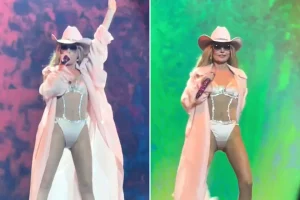
Shania Twain, long celebrated as the “Queen of Country Pop,” has once again demonstrated her fearless approach to performance and public persona with a striking fashion statement during her Las Vegas residency. At 59, Twain continues to captivate audiences, proving that age does not constrain her creativity, confidence, or willingness to experiment with style. During a recent performance, she appeared in a sparkling silver bodysuit paired with a vibrant pink jacket and her signature cowboy hat, immediately drawing attention from fans, media outlets, and critics alike. The ensemble, both glamorous and theatrical, reflected Twain’s distinctive aesthetic—a blend of country charm and pop spectacle that has defined her career for decades. Social media quickly filled with reactions, ranging from enthusiastic praise to playful criticism, highlighting how performance fashion often sparks strong opinions among audiences. The outfit echoed many of the bold looks that made Twain famous during the late 1990s and early 2000s, when her concerts frequently featured sequins, leather, dramatic silhouettes, and stage-ready glamour. These visual elements became part of the storytelling that accompanied her music, transforming concerts into immersive experiences rather than simple performances. Her Las Vegas appearance reinforced the idea that Twain sees every show as more than a musical event. Instead, she approaches the stage as a place where sound, fashion, personality, and theatrical energy merge into one unified performance. By continuing to embrace daring outfits and vibrant styling, Twain reminds audiences that her artistry has always been about more than singing songs—it is about creating memorable moments that celebrate individuality and confidence.
Supporters of Twain’s latest fashion choice were quick to celebrate her audacity and self-assurance. Many fans pointed out that the full-body pantyhose element of the outfit provided coverage while still allowing her to present a glamorous and striking look. Admirers praised her for continuing to exude confidence and individuality, emphasizing that her stage presence transforms clothing from mere costume into a statement of empowerment. Twain’s ability to command attention at 59 challenges long-standing assumptions about aging in the entertainment industry, particularly for female performers who often face pressure to dress more conservatively as they grow older. Online discussions filled with messages applauding her energy, charisma, and showmanship. For many fans, Twain represents a generation of performers who helped redefine what it meant to be a successful woman in both country and pop music. Her career has been built on a willingness to take risks—musically, visually, and personally. Supporters argued that her outfit symbolized artistic freedom and personal liberation, reminding audiences that fashion on stage can serve as a powerful form of self-expression. Rather than seeing the ensemble as controversial, many viewers interpreted it as an affirmation of confidence and resilience. In this sense, Twain’s Las Vegas look transcended simple wardrobe choice; it became a visual expression of strength, independence, and the enduring spirit that has characterized her career since she first rose to international fame.
Despite widespread admiration, Twain’s outfit also attracted criticism from some observers. A number of commentators suggested that the look was overly flashy, arguing that the dramatic styling drew attention away from the music itself. Social media jokes and comparisons circulated online, illustrating how quickly celebrity fashion choices can become subjects of public debate. These reactions sparked broader conversations about the double standards often faced by aging female performers. Male artists frequently appear on stage in flamboyant or unconventional clothing without generating the same level of scrutiny, while women are sometimes criticized more harshly for similar decisions. Critics who focused primarily on Twain’s appearance rather than her performance unintentionally highlighted the persistent expectations placed on women in the entertainment world. Cultural commentators noted that female performers are often pressured to balance attractiveness, modesty, and age-appropriate presentation according to shifting societal norms. When artists like Twain challenge those expectations, the response can be polarizing. Yet such moments also open important discussions about gender, creativity, and artistic freedom. Twain’s career provides a powerful example of how performers can navigate these challenges while maintaining authenticity. Throughout decades in the spotlight, she has repeatedly demonstrated that public opinion does not define her artistic identity. Instead, she continues to express herself in ways that feel genuine and exciting, even when doing so invites criticism.
Throughout the conversation surrounding her Las Vegas outfit, Twain herself remained largely unfazed. Known for her warm personality and positive outlook, she responded to the attention with humor and appreciation rather than defensiveness. On social media, she thanked her fans enthusiastically, expressing gratitude for their energy and participation during the show. Her response reflects a philosophy she has embraced throughout her long career—one centered on authenticity, joy, and resilience. In an era when celebrity culture often magnifies criticism and controversy, Twain’s relaxed reaction demonstrated confidence in her own identity as an artist. Rather than allowing commentary to overshadow the performance, she maintained focus on what matters most: connecting with her audience through music and entertainment. Within the context of a Las Vegas residency, known for spectacle and theatrical presentation, her dramatic outfit fits perfectly into the environment. Las Vegas shows traditionally emphasize visual excitement, elaborate staging, and bold costumes designed to enhance the overall experience. Twain’s sparkling ensemble aligns with this tradition while still reflecting her own recognizable style. Her response to public debate highlights an important lesson about longevity in the entertainment industry: the ability to remain grounded and joyful despite constant scrutiny. By choosing gratitude over defensiveness, Twain reinforces the sense of authenticity that has endeared her to fans for decades.
Beyond the immediate attention generated by the outfit, Twain’s fashion choice carries broader cultural meaning. By confidently wearing a glittering bodysuit at 59, she challenges long-standing assumptions about how women should present themselves as they age. Many societies hold subtle expectations that women should gradually adopt quieter, more conservative styles as they grow older. Twain’s bold stagewear pushes against those expectations, suggesting that creativity and self-expression should not diminish with time. For many observers, her look represents a celebration of individuality and a rejection of age-based limitations. In this way, Twain’s performance becomes part of a larger conversation about empowerment and self-acceptance. The entertainment industry has historically placed intense pressure on women to maintain youthful appearances while simultaneously discouraging them from embracing bold self-expression later in life. Twain’s willingness to defy these contradictory expectations sends a powerful message: personal style should reflect personality, confidence, and joy rather than societal restrictions. Fans who see her perform may feel encouraged to embrace their own individuality, regardless of age. Through sequins, bright colors, and theatrical design, Twain’s stage wardrobe transforms into a symbol of empowerment and freedom, reminding audiences that creativity and excitement remain possible at every stage of life.
Ultimately, Twain’s Las Vegas appearance highlights the qualities that have defined her enduring success: confidence, creativity, and authenticity. Over the course of her career, she has consistently blended musical innovation with striking visual presentation, creating performances that resonate across generations of fans. Her willingness to experiment with fashion and stage design reflects a broader philosophy that artistry should be fearless and joyful. Whether audiences respond with admiration, surprise, or debate, Twain continues to demonstrate that true performers are not afraid to stand out. Her wardrobe choices function as an extension of her storytelling, helping to create memorable experiences that connect music, personality, and spectacle. In an entertainment landscape that constantly evolves, Twain’s ability to remain relevant and exciting speaks to her deep understanding of performance as both art and celebration. By stepping on stage in a sparkling bodysuit and cowboy hat with complete confidence, she reminds audiences that creativity thrives when artists embrace who they truly are. Her Las Vegas residency therefore becomes more than a series of concerts—it becomes a testament to the power of individuality, the joy of self-expression, and the timeless appeal of an artist who continues to shine brightly on her own terms.