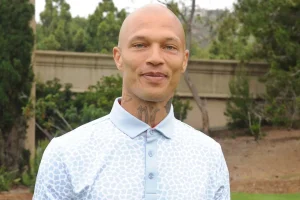
One viral photograph can alter a life in ways few could ever predict, and Jeremy Meeks’ journey remains one of the most striking examples of this modern phenomenon. In 2014, the Stockton Police Department posted a routine booking photo on Facebook, intending to inform the public about an arrest. Instead, the image exploded across the internet. Meeks’ piercing blue eyes, sharply defined features, and intense gaze stood in stark contrast to the grim context of his criminal charges. Within hours, the photograph had spread globally, drawing millions of reactions, shares, and comments. He was quickly dubbed “the world’s hottest felon,” a label that combined fascination, irony, and controversy. What seemed like fleeting online amusement soon proved far more consequential: that single image did not just make Meeks famous—it disrupted the trajectory of his life and highlighted the unpredictable power of visibility in the digital age.
Jeremy Meeks was born on February 7, 1984, in Stockton, California, a city where economic hardship and crime frequently intersect. His childhood was shaped by instability, exposure to violence, and family addiction, all of which left deep emotional and behavioral imprints. These early experiences steered him toward troubled paths, culminating in a criminal record that included a felony conviction for car theft at age 18. The cycles of incarceration and release became familiar, creating a sense of inevitability about his future. Yet beneath these struggles was a striking physical appearance that, at the time, held little value within his lived reality. His 2014 arrest on felony weapon charges led to a 27-month prison sentence, which initially seemed like just another chapter in a repeating pattern. Instead, it became the catalyst for exposure to a world he had never imagined entering.
While serving his sentence, the viral reach of Meeks’ mugshot continued to grow, capturing the attention of modeling agencies, fashion executives, and media figures. The fascination was not merely superficial; the industry recognized both his raw intensity and the compelling story behind his sudden fame. Unlike many viral sensations, who quickly fade from public consciousness, Meeks’ image resonated deeply in a sphere driven by visuals and narratives. Upon his release in 2016, he stepped into a radically altered reality, signing with White Cross Management almost immediately. Transitioning from notoriety to professionalism required discipline, adaptability, and a willingness to navigate an entirely new industry—one removed from the life he had known.
Meeks’ modeling career accelerated rapidly, fueled by both his striking appearance and the narrative of reinvention. He walked runways and appeared in campaigns for high-profile brands such as Philipp Plein and Tommy Hilfiger, cementing his place within the fashion world. His ability to command attention on camera suggested an intuitive understanding of visual storytelling, beyond mere aesthetic appeal. Media coverage framed him as a symbol of second chances, and Meeks leaned into that narrative, using the visibility to expand his professional scope. Acting opportunities soon followed, with roles in films including True to the Game, Trigger, and Secret Society, reflecting his ambition to explore creative expression across multiple platforms rather than remaining confined to modeling.
Entrepreneurship became another defining dimension of Meeks’ evolving identity. Understanding the transient nature of fame, he sought to build lasting ventures, launching fashion initiatives and partnering with Fashion Concept GmbH. These efforts allowed him to exercise creative control and strategic thinking, turning public curiosity into sustainable enterprise. This phase represented a shift from reactive success to intentional reinvention: Meeks was no longer simply responding to opportunity; he was actively shaping it. His journey challenged assumptions about criminal records, redemption, and the possibilities for personal reinvention. Each step in his career reinforced the idea that transformation is a continuous process built through consistent effort, discipline, and accountability.
By 2024, Meeks had further extended his story with the release of Model Citizen: The Autobiography of Jeremy Meeks. The memoir offered an unfiltered look at his upbringing, incarceration, sudden fame, and internal struggles. Rather than glamorize his past, he emphasized the consequences of his choices and the lessons derived from hardship. In interviews, he spoke candidly about responsibility, growth, and the importance of using his platform to inspire others. Now 41, Meeks balances his multifaceted career with a strong commitment to fatherhood and self-improvement. His evolution—from viral mugshot to international model, actor, entrepreneur, and author—illustrates the unpredictable nature of opportunity in the digital era. Above all, his story serves as a testament to resilience, adaptability, and the extraordinary potential of unexpected moments to catalyze reinvention.