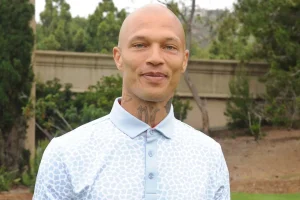
One viral photograph has the power to alter the course of a life in ways that few could predict, and the story of Jeremy Meeks stands as one of the most compelling examples of this phenomenon in the digital age. In 2014, the Stockton Police Department posted a routine booking photo on its official Facebook page, intending to inform the public about a recent arrest. What followed, however, was anything but routine. The image spread rapidly across social media platforms, capturing global attention almost instantaneously. Meeks’ striking blue eyes, chiseled facial structure, and intense gaze created a powerful visual contrast with the seriousness of his criminal charges. Within hours, the photograph amassed thousands, then millions, of reactions, comments, and shares. Internet users around the world began referring to him as “the world’s hottest felon,” a phrase that encapsulated both fascination and irony. What initially seemed like a fleeting moment of online curiosity soon evolved into a cultural phenomenon, demonstrating how quickly public perception can shift when amplified by social media. More importantly, the viral spread of this single image disrupted the expected trajectory of Meeks’ life, opening doors that had previously been unimaginable. It revealed the immense and often unpredictable power of visibility in a hyperconnected world, where attention can be transformed into opportunity almost overnight.
Born on February 7, 1984, in Stockton, California, Jeremy Meeks grew up in an environment shaped by economic hardship, instability, and exposure to crime. His early life was marked by challenges that extended beyond his control, including family struggles with addiction and violence. These formative experiences had a lasting impact, influencing both his emotional development and the choices he made as he grew older. By the time he reached adulthood, Meeks had already encountered the criminal justice system, including a felony conviction for car theft at the age of 18. His life began to follow a pattern that is all too common in disadvantaged communities: cycles of incarceration and release that reinforced a sense of inevitability about the future. Opportunities for change were limited, and the structural barriers he faced made it difficult to break free from this pattern. When he was arrested again in 2014 on felony weapon charges, it appeared to be another continuation of the same trajectory. He was sentenced to 27 months in prison, a development that, under ordinary circumstances, would have further entrenched him in the system. Yet this particular moment would prove to be anything but ordinary, as the viral spread of his mugshot introduced him to a global audience and set the stage for an unprecedented transformation.
While Meeks served his sentence, the online fascination with his image continued to grow, evolving from a viral curiosity into a sustained public interest. Modeling agencies, fashion executives, and media outlets began to take notice, intrigued not only by his physical appearance but also by the unusual circumstances that had brought him into the spotlight. What made this situation unique was the speed with which digital attention translated into real-world opportunity. In an industry driven by visual impact and storytelling, Meeks represented a rare convergence of both. His image carried a narrative of contradiction—beauty juxtaposed with criminality—that captured the imagination of audiences and professionals alike. Unlike many viral sensations whose fame fades quickly, Meeks’ appeal proved enduring, in part because it resonated with broader cultural themes of redemption and reinvention. By the time he was released from prison in 2016, he entered a world that had already begun to redefine him. He signed with White Cross Management shortly after his release, marking a decisive shift from notoriety to professionalism. This transition was not without challenges; it required him to adapt to an entirely new environment, learn the expectations of the fashion industry, and demonstrate a level of discipline that would sustain his newfound career. His willingness to embrace these demands played a crucial role in transforming viral fame into a viable professional path.
Meeks’ entry into the fashion world was marked by rapid progress and high-profile opportunities, underscoring both his unique appeal and the industry’s openness to unconventional narratives. He walked runways and appeared in campaigns for major brands, including Philipp Plein and Tommy Hilfiger, establishing himself as a recognizable figure within the global fashion scene. His presence on the runway was defined by a confident intensity that translated well to both live performance and photography. Beyond his physical attributes, Meeks demonstrated an intuitive understanding of how to convey emotion and narrative through visual media, a skill that elevated him beyond the status of a novelty. Media coverage frequently framed his story as one of transformation, emphasizing the contrast between his past and present. Rather than distancing himself from this narrative, Meeks chose to engage with it, using it as a platform to expand his career. His ambitions extended beyond modeling into acting, where he pursued roles in films such as True to the Game, Trigger, and Secret Society. These projects reflected his desire to explore new forms of creative expression and to build a multifaceted career. Through these efforts, Meeks demonstrated that his success was not solely the result of viral fame, but also of his ability to adapt, learn, and grow within competitive industries.
As his career evolved, Meeks began to focus increasingly on entrepreneurship, recognizing the importance of building a sustainable future beyond the volatility of public attention. He launched his own fashion-related ventures and collaborated with Fashion Concept GmbH, taking on roles that extended beyond modeling into business development and creative direction. This phase of his journey marked a significant shift in mindset, from reacting to opportunities as they arose to actively creating them. By engaging with the business side of the fashion industry, Meeks gained greater control over his professional trajectory, allowing him to shape his brand and explore new avenues for growth. His entrepreneurial efforts reflected a broader understanding of the fleeting nature of fame, emphasizing the need for long-term planning and strategic thinking. At the same time, his story continued to resonate with audiences, challenging conventional assumptions about criminal records and the possibility of redemption. Meeks became a symbol of second chances, illustrating that transformation is achievable through consistent effort and a willingness to embrace change. His journey highlighted the complexities of reinvention, showing that it is not a single moment but an ongoing process that requires resilience, accountability, and determination.
By 2024, Meeks expanded his narrative into the literary world with the release of his memoir, Model Citizen: The Autobiography of Jeremy Meeks. The book offered a candid and introspective account of his life, detailing his upbringing, encounters with the criminal justice system, sudden rise to fame, and the internal struggles that accompanied these experiences. Rather than romanticizing his past, Meeks presented it with honesty, acknowledging the consequences of his actions while emphasizing the lessons he had learned. Through interviews and public appearances, he spoke about personal responsibility, growth, and the importance of using his platform to inspire others. Now in his early forties, he balances his roles as a model, actor, entrepreneur, and author with a commitment to fatherhood and self-improvement. His story continues to captivate because it embodies the unpredictable nature of opportunity in the digital era, where a single moment of visibility can reshape an entire life. Ultimately, Jeremy Meeks’ journey serves as a powerful reminder that transformation is possible, even in the most unlikely circumstances. It underscores the value of resilience, adaptability, and self-belief, illustrating how individuals can redefine themselves and build meaningful futures despite the challenges of their past.