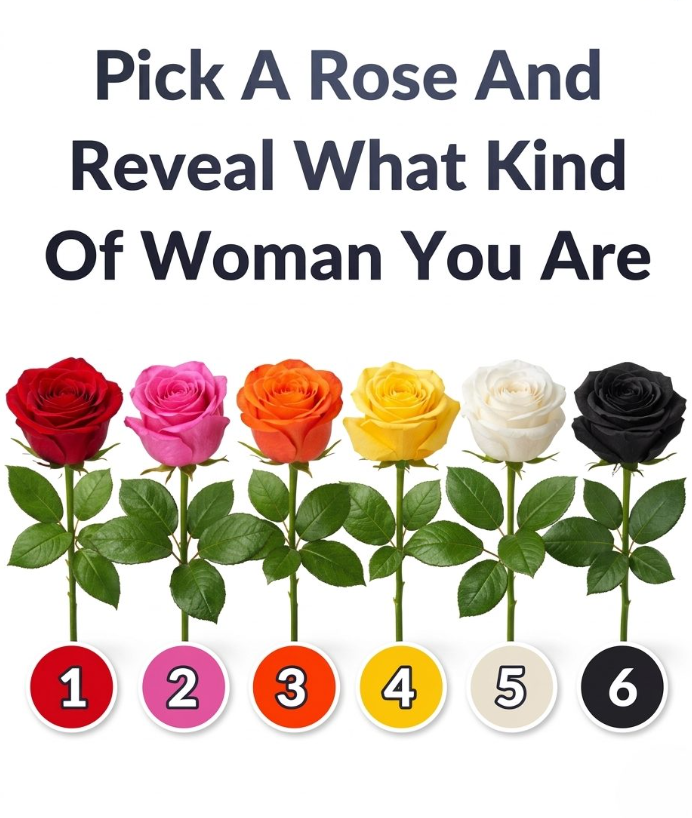
Human personality is often interpreted through symbols and simple preference-based choices that feel meaningful even when they are not strictly diagnostic. Roses, in particular, are frequently used in this symbolic way because they carry long-standing emotional and cultural associations across many societies. A person choosing a rose based on instinct rather than analysis is often engaging in a reflective process where emotion, imagination, and self-perception intersect. In this context, roses function less as literal indicators of personality and more as mirrors that reflect how individuals interpret their own emotional landscape. The meaning assigned to each rose color is not fixed or universal, but it is shaped by shared cultural symbolism that gives certain colors recognizable emotional tones. Red roses are commonly associated with passion, intensity, and deep emotional engagement, often linked to individuals who experience feelings strongly and tend to invest deeply in relationships and personal goals. Pink roses, by contrast, are generally connected to gentleness, empathy, affection, and emotional sensitivity, suggesting a personality style that values care, harmony, and supportive connection with others. These interpretations are not absolute definitions but symbolic frameworks that help translate emotional tendencies into visual language.
Orange and yellow roses are often associated with optimism, creativity, and energetic expression. People drawn to these colors are typically viewed as enthusiastic, expressive, and oriented toward growth, novelty, or social interaction. Yellow in particular is frequently linked with positivity and mental brightness, while orange carries associations of vitality, excitement, and forward momentum. White roses introduce a different symbolic layer, often representing clarity, calmness, simplicity, and emotional balance. Individuals who resonate with white are often thought to prefer stability, peace, and mental or emotional clarity in their surroundings. Darker or more unusual rose tones, such as deep burgundy or nearly black shades, are frequently interpreted as symbols of introspection, independence, mystery, or emotional depth. These associations suggest a personality orientation that is more private, reflective, or internally focused. Together, these color meanings form a symbolic vocabulary that allows people to translate abstract emotional tendencies into something visually recognizable and personally meaningful.
Importantly, most individuals do not align with a single symbolic category. Instead, people often feel drawn to multiple rose colors simultaneously, which reflects the complexity and variability of human personality. A person who resonates with red may also appreciate the calmness of white, while someone attracted to yellow might also identify with the emotional softness of pink. This overlap demonstrates that personality is not a fixed structure but a dynamic combination of traits that shift depending on context, experience, and emotional state. Symbolic systems like rose-color interpretation are most useful when they are understood as flexible reflections rather than strict classifications. They allow individuals to explore different aspects of themselves without forcing identity into rigid categories. In this sense, roses become tools for introspection rather than labels, offering a gentle framework for self-exploration.
Ultimately, the act of choosing a rose color is less about defining who a person is and more about encouraging awareness of how they feel and how they interpret those feelings. These symbolic associations provide a language for emotions that are often difficult to express directly, making them useful for reflection and conversation. While they should not be mistaken for psychological assessments or scientific measurements, they can still offer meaningful insights when used thoughtfully. By engaging with these symbolic choices, individuals may better understand the range of emotions and tendencies they experience, recognizing that identity is layered, fluid, and shaped by both internal states and external influences. Roses, in this sense, serve as a simple but powerful reminder that human personality is not singular or static, but multifaceted and continually evolving.